Sometimes even small towns have a great amount of history; Dayton, Washington is one of those places. The museums are small and the exhibits less spectacular than the big city museums, yet they offer a glimpse into local history that is often just as interesting and inspiring. And, it turns out, Dayton and Waitsburg sit directly on the Lewis and Clark trail, which expands “local” history way beyond local.
This itinerary is a great weekend trip, though Dayton and Waitsburg need to be visited on Saturday as the sites there are not open on Sunday.
Bruce Memorial Museum
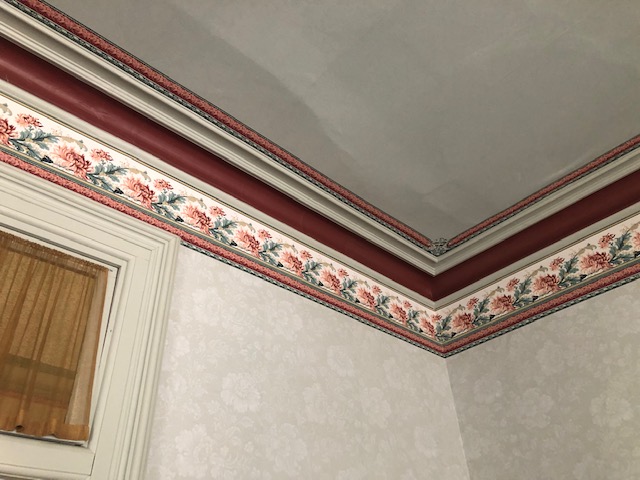
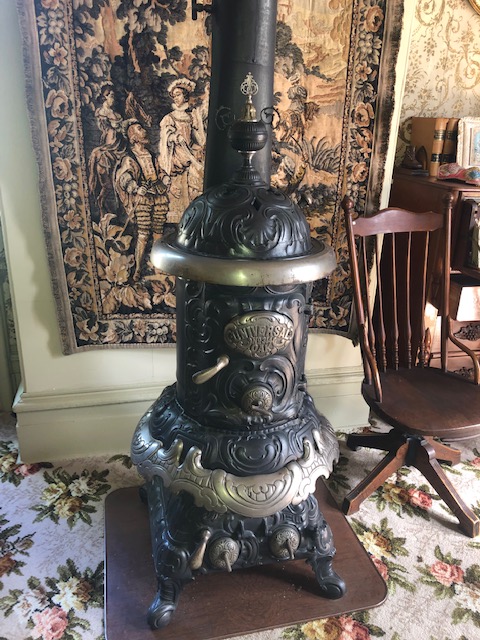
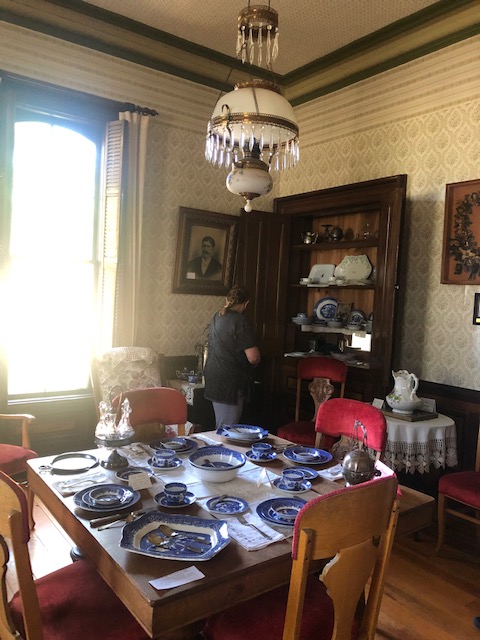
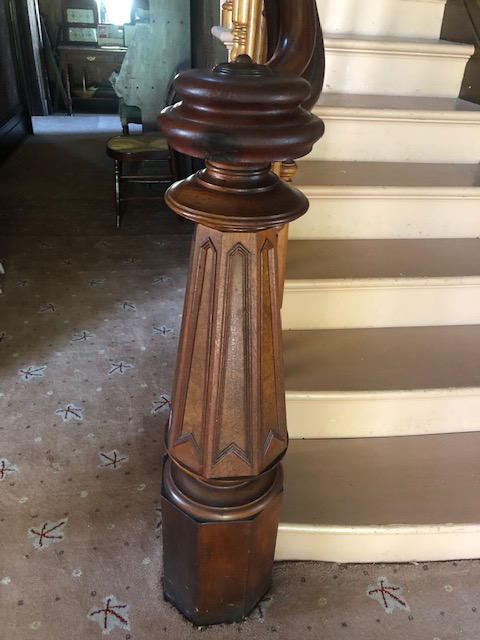
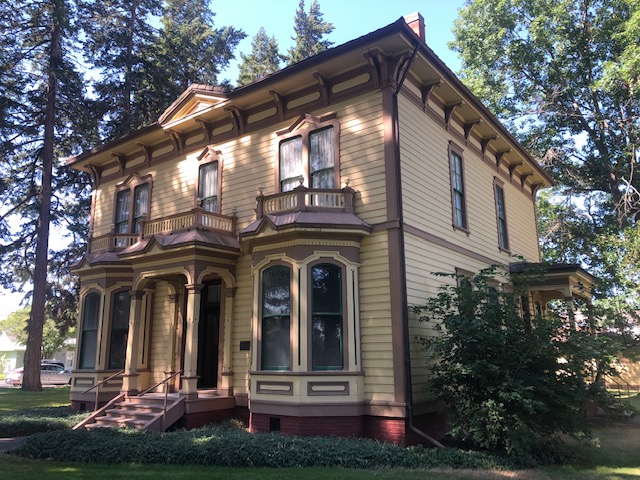
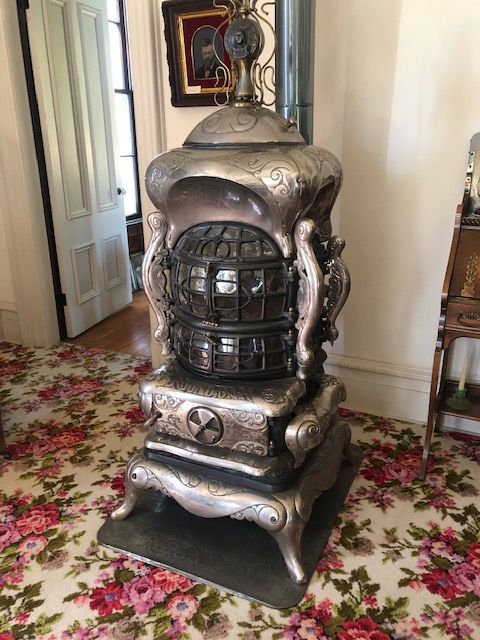
This beautiful Victorian home was built in 1883 by Perry and Caroline Bruce and is restored to its pre-plumbing, pre-electricity Victorian glory. Amazingly, some of the wallpapers remain as the original wall coverings while others are reproductions of the originals. The Bruce Museum is a small town historical treasure! Tours are led by a knowledgeable docent. Plan on one hour for your visit.
Here are details you will need, including the address to enter into your navigation app:
Bruce Memorial Museum, 330 Main St, Waitsburg, WA 99361, 509-386-3739. Open: by appointment only, 9-5 mid-May-Sep. Admission: $10 suggested donation per person. No restrooms.
Lewis and Clark Trail State Park
Between Waitsburg and Dayton sits the state park named for the leaders of the Corps of Discovery. A stop here is worth it just to read several interpretive panels, most of them placed near the restrooms. The park straddles US-12; you want to turn right at the park if coming from Waitsburg. This is a state park thus a Washington State Discover Pass is required; often, a stop of up to 15 minutes is allowed at park rest areas without a Discover Pass or day use fee but we didn’t see a sign to that effect but our guess is you’d be safe.


Dayton Historic Depot
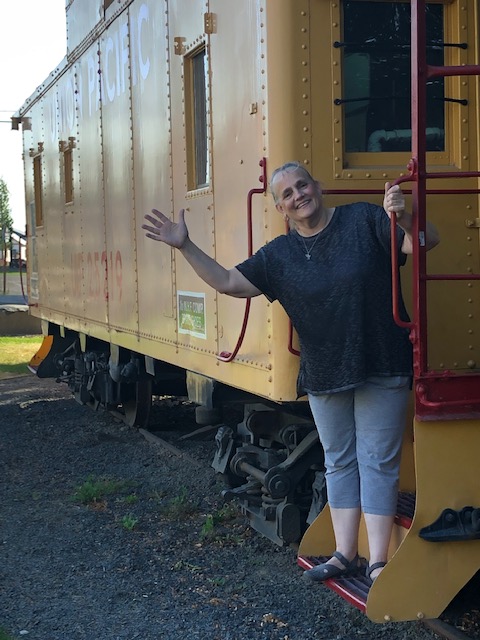
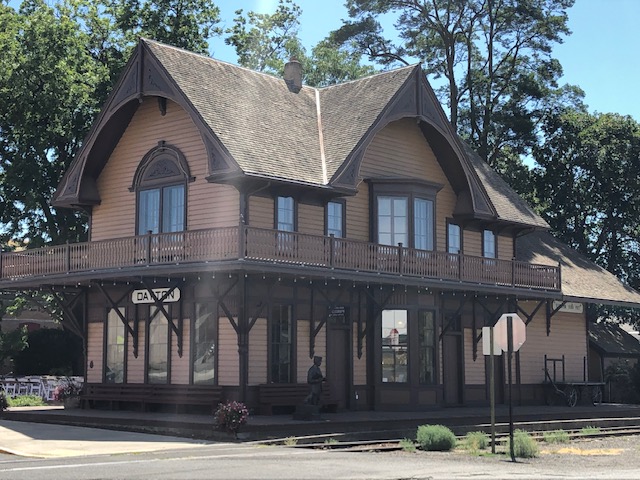
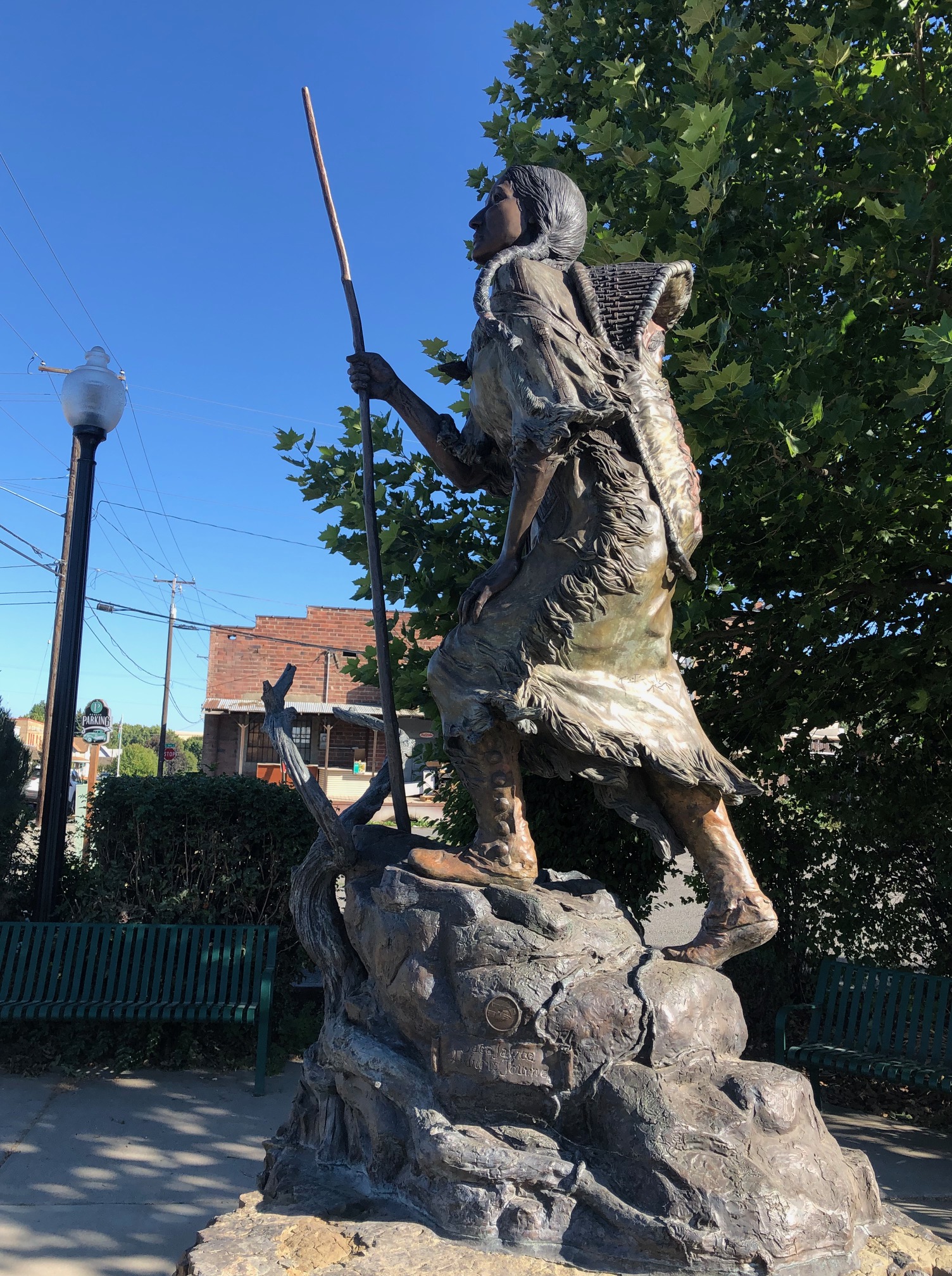
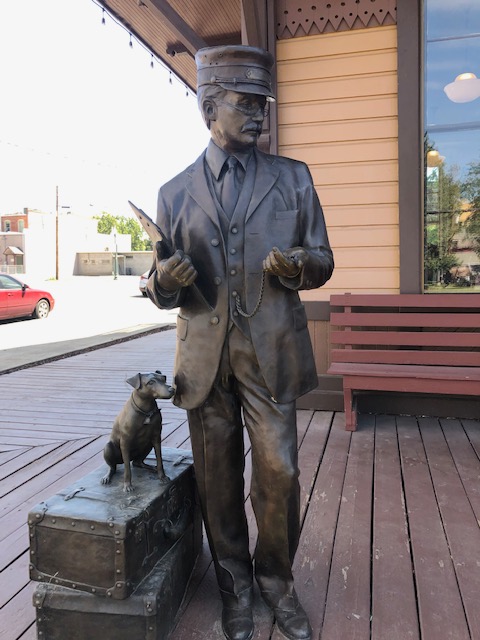
The depot was built in 1881 and was moved to its current location in 1899 using log rollers pulled by horse and winch; the depot was finally closed on January 1, 1972 and was placed on the National Register of Historic Places in 1974. The Dayton Depot is the oldest surviving passenger train station in Washington State. The freight scale is still in place and still works. Don’t miss the display outside the depot that describes how the depot was moved in 1899—and don’t miss the bronze sculpture of Sacajawea, found one block west of depot at the intersection of E Commercial St and N 1st St. Plan on one hour for your visit.
Here are details you will need, including the address to enter into your navigation app:
Dayton Historic Depot, 222 E. Commercial St, Dayton, WA 99328, 509-382-2026. Open: May-Oct, Wed-Sat 10-5; Nov-Apr, Wed-Sat 11-4; closed on holidays. Admission: Free, donation suggested. Gift shop on site. No restrooms.
The Boldman House Museum
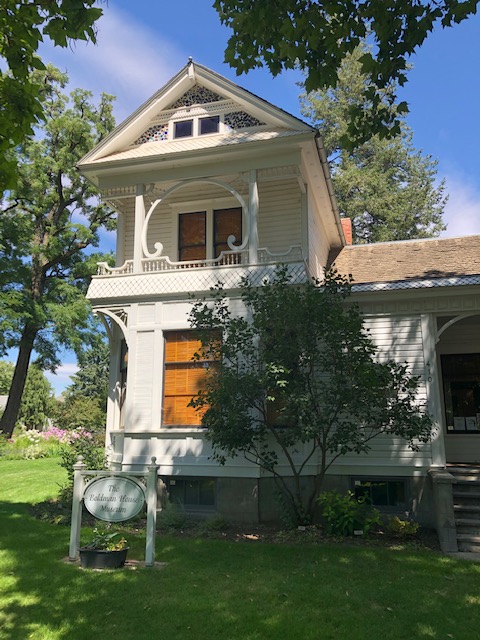
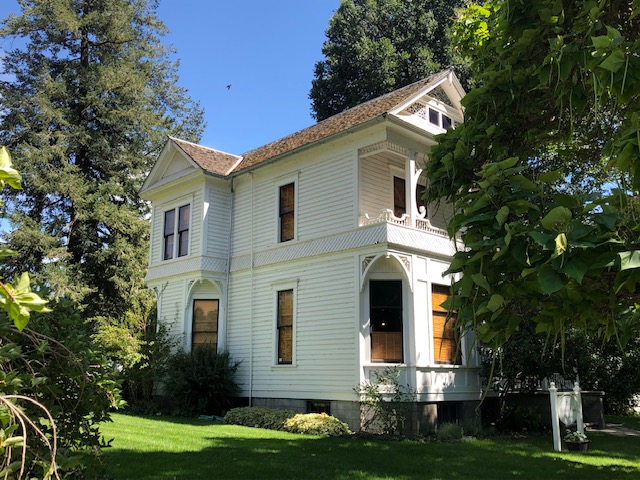
The original house was built in 1880 as a small, three-room home and was owned by several families before it was purchased by Stephen and Blanche Boldman in 1912. In the years before 1912 a second story, a basement, an entrance foyer, and an extension in the back were added, as well as bay windows and a second story balcony, transforming the house into the graceful Victorian home that has survived to this day.
Members of the Boldman family, which included four daughters–Minnie, Marie, Goldie, and Gladys, lived in the house for 87 years until Gladys, the youngest daughter, died in 1999 at the age of 91.
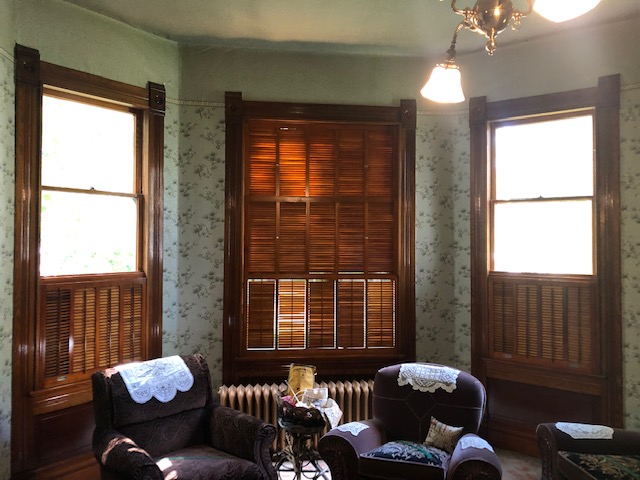
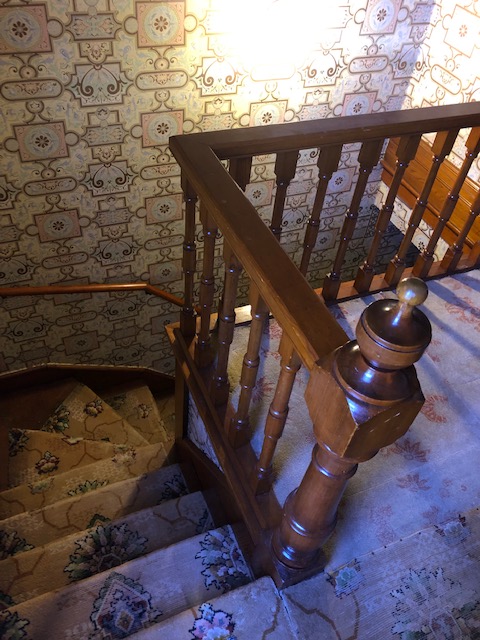
The Boldman family were “savers” so the house is something of a time capsule; all the furnishings in the house belonged to Boldman family members. Many of the wallpapers are even original while others are reproductions of the original wall coverings. Even the gardens that surround the house contain only flowers that were available in 1912.
Plan on one hour for your visit.
Here are details you will need, including the address to enter into your navigation app:
The Boldman House Museum, 410 North First Street, Dayton, WA 99328, 509-382-2026. Open: Thu-Sat 10-5, Feb-Dec. Admission: Free, donation suggested. No restrooms.

Columbia County Courthouse
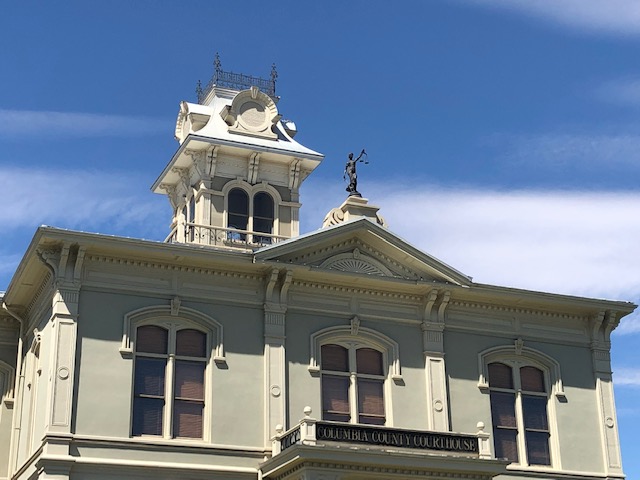
Columbia County was formed from Walla Walla County in 1875 and construction on the Italianate-style courthouse began in 1886 and completed in 1887, two years before Washington became a state. Over the years, upgrades and repairs removed many of the Italianate design features, including removing the cupola in 1947, but in 1981 the community came together with a plan to restore the courthouse to its original splendor and the extensive, award-winning restoration was completed in 1994.
This Dayton landmark, on the National Register of Historic Places, is the oldest continually operated courthouse in Washington State. The building is not open on the weekends but you may want to stop by to snap a photo or two—you may not be the only photographer present when you do.
Here are details you will need, including the address to enter into your navigation app:
Columbia County Courthouse, 341 E Main St, Dayton, WA 99328, 509-382-2200.

The Palus Museum
The museum collects artifacts of the Palouse Indians (Palus is the preferred tribal spelling) who wintered in the region and also exhibits Lewis and Clark and early homesteading exhibits.
Here are details you will need, including the address to enter into your navigation app:
The Palus Museum, 426 E. Main St, Dayton, WA 99328, 509-540-9560 or bluemountainheritage@gmail.com. Open: Apr-Nov, Fri-Sat 1-4 or by appointment. Admission: Free, donation suggested. No restrooms.
Patit Creek Campsite
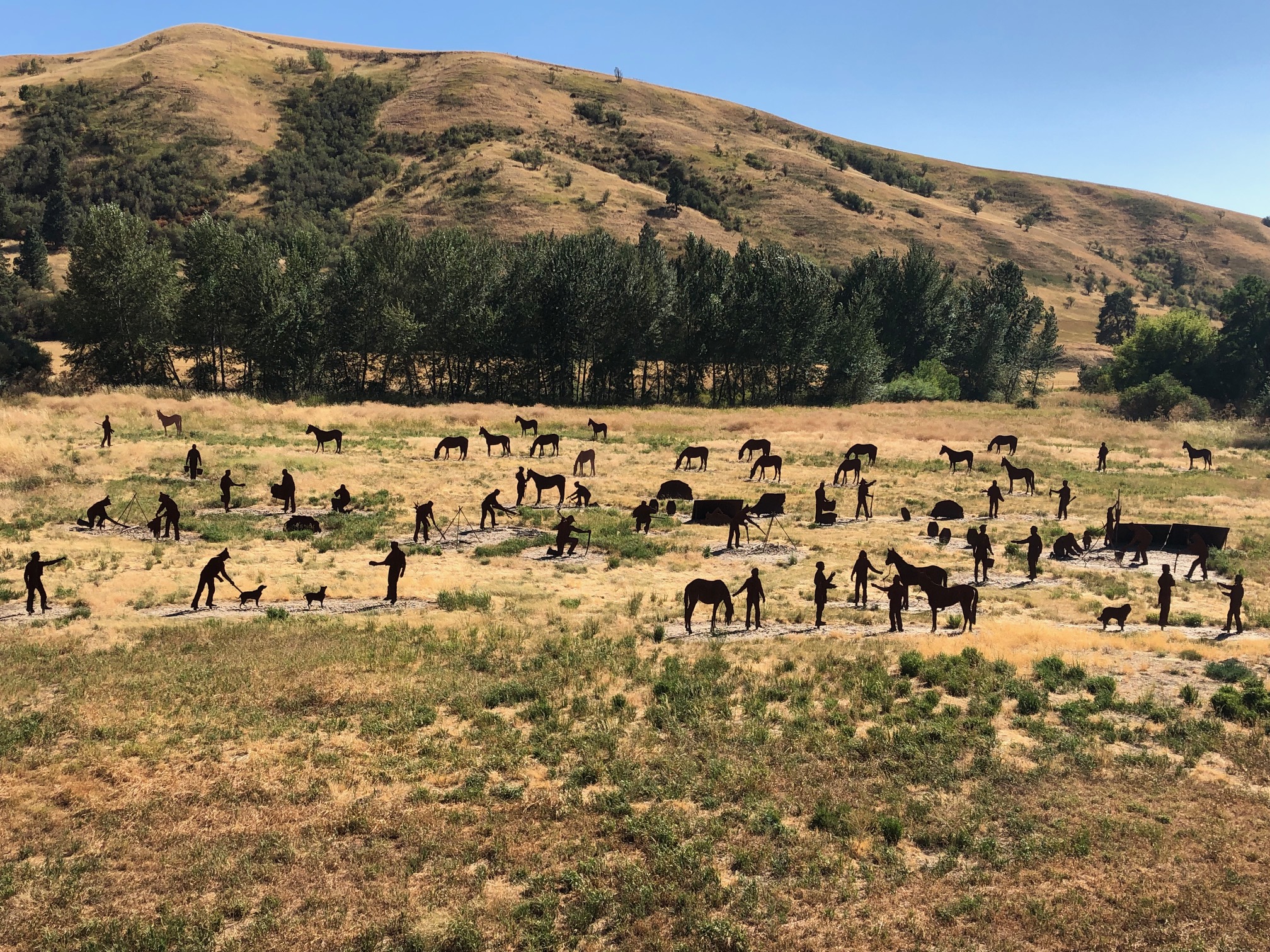
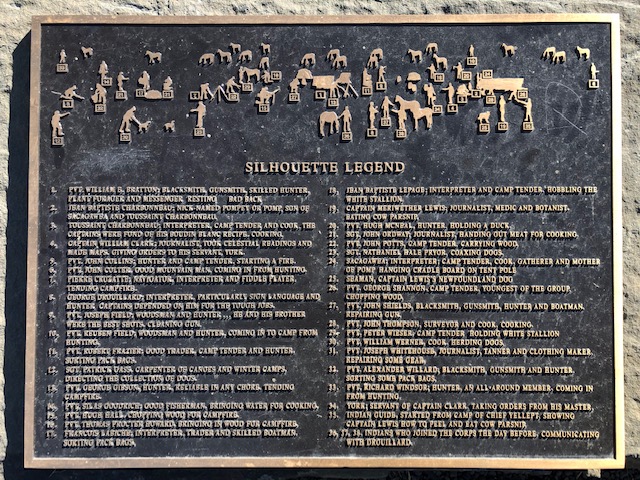
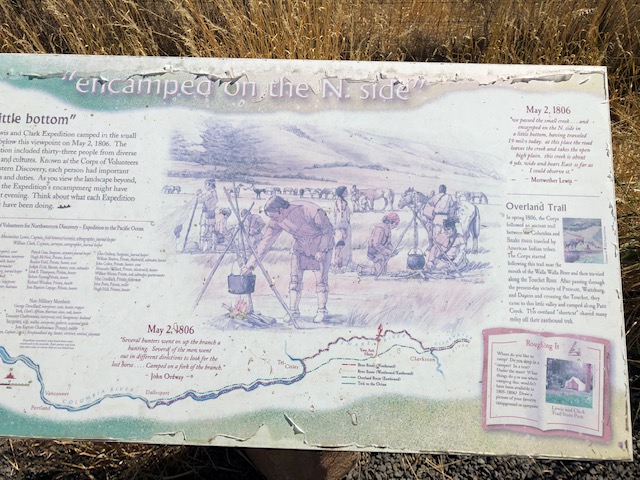
The Corps of Discovery followed an Indian trail that would later become Dayton’s Main Street, to a campsite only 2.5 miles east of Dayton off of today’s Patit Road. The site displays over 80 life-size steel silhouettes of every member of the expedition and even their animals. A bronze legend identifies each person and what task they are engaged in while encamped. Interpretive panels further educate visitors about the site.
Dinner and Accommodations
Unless you brought sandwiches for lunch, you are likely to be looking for both lunch and dinner. Here are our recommended eateries in Dayton.
Chief Springs Fire & Irons Brew Pub: 134 E Main St, Dayton; Fiesta En Jalisco: 400 W Main St, Dayton; Locally Nourished: 217 E Main St, Dayton (breakfast and lunch only); My Dad’s Place: 127 E Main St #1350, Dayton.
For accommodations, we recommend Best Western Plus Dayton Hotel & Suites, 507 E Main St, Dayton, WA 99328, 509-382-4790.
Lyons Ferry State Park
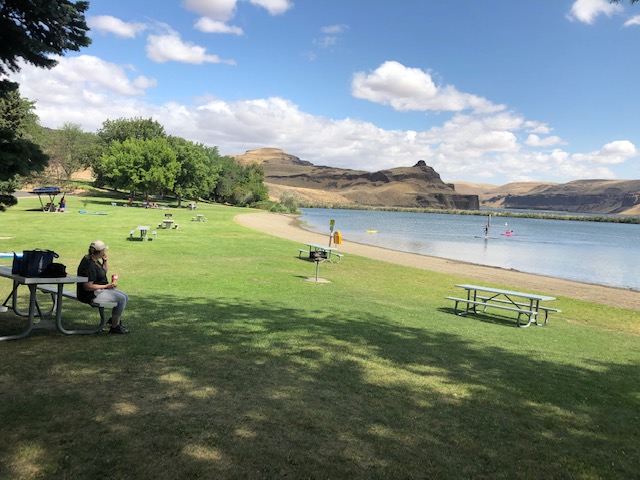
Day Two begins with a drive north from Dayton. Head north on US-12; after about 16 miles US-12 junctions with SR-261. Turn left on SR-261 and drive about 11 miles and turn right into Lyons Ferry State Park.
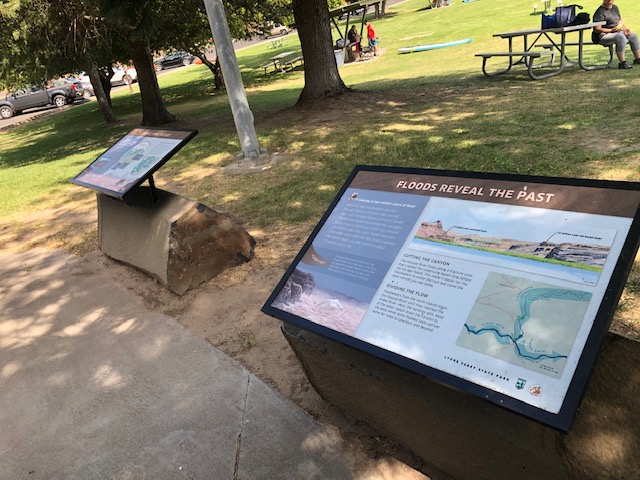
The park has a number of interpretive panels that educate the visitor about the Corps of Discovery and about geologic features of the region—they make the stop here worth it. This is a state park so a Washington State Discover Pass is required, though a visit of up to 15 minutes is allowed without a Discover Pass—just enough time to pull up to the restrooms and go read the panels (oh, and maybe use the restroom!). The park is open daily 9-5.
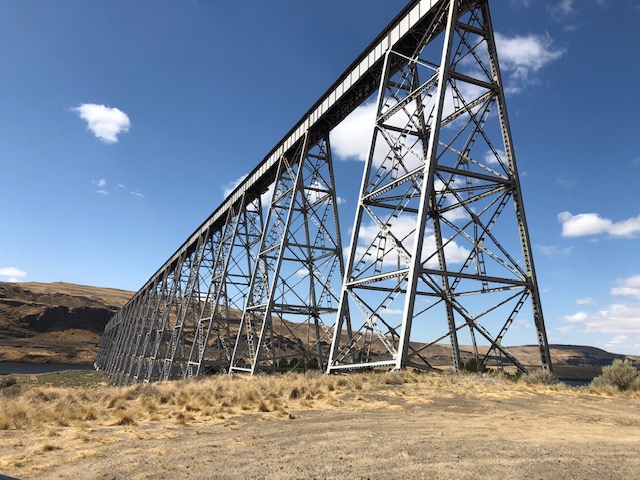
Only 1000 feet west of the park is the Joso High Bridge, which is something to see! Construction of the railroad bridge began and 1910 and was completed in 1912. At the time of its construction this engineering marvel was both the longest and the highest railroad bridge in the world at 3920 feet long and 260 feet above the river (as well as 65 feet below the riverbed!). The bridge remains in service and is still one of the longest bridges in the Union Pacific system.
Lyons Ferry Fish Hatchery
A tour of the facility is self-guided and includes a visitor center; interpretive panels educate the visitor about the hatchery’s purpose and the fish that are raised here.
Here are details you will need, including the address to enter into your navigation app:
Lyons Ferry Fish Hatchery, 13780 WA-261, Washtucna, WA 99371, 509-646-3454. Open: daily 8-3:45. Admission: Free.
Palouse Falls State Park
From Lyons Ferry State Park continue north on SR-261. After roughly six miles, turn right onto Palouse Falls Road; the gravel road goes about 2.5 miles to the park.
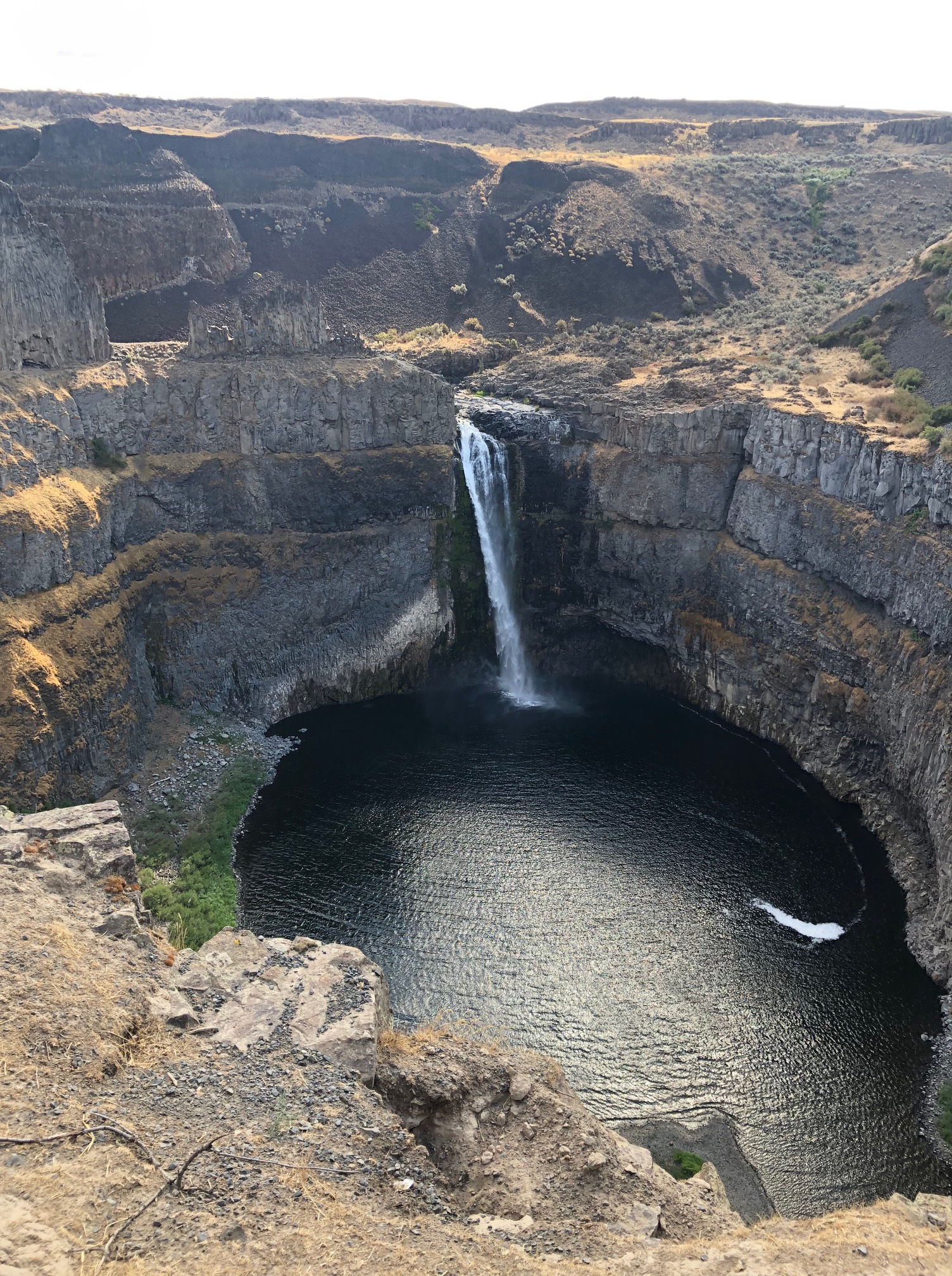
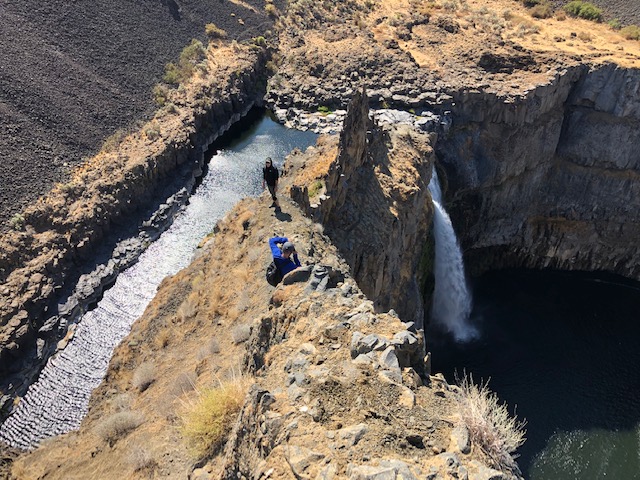
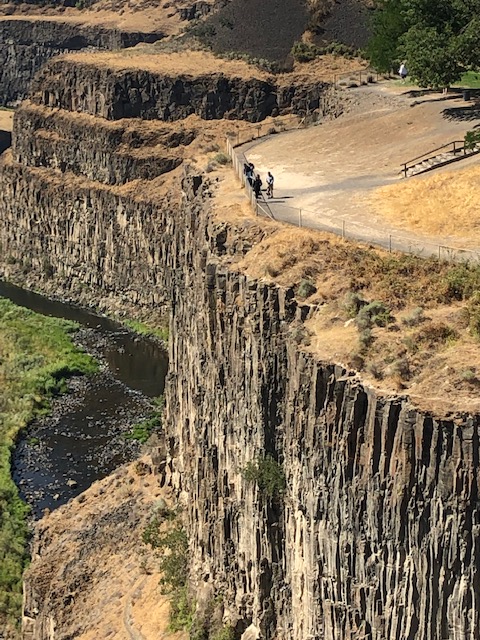
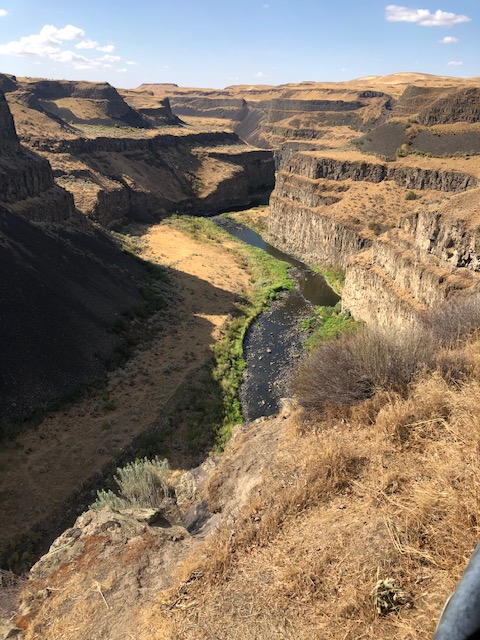
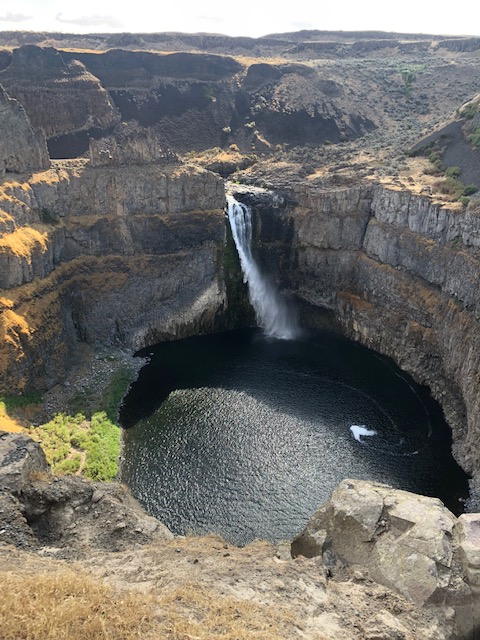
Palouse Falls is one of a small number of remaining waterfalls from the path of the great ice age floods that carved so much of the region’s geologic features. Palouse Falls drops 200 feet into a bowl and gorge carved by the ice age floods more than 13,000 years ago.
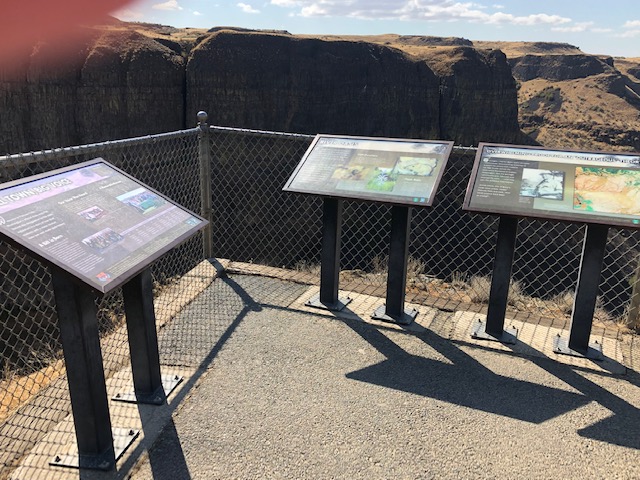
Palouse Falls happens to be the official waterfall of Washington State, designated as such in 2014 after the state legislature passed a bill written by Washtucna school children. You can read about the children’s effort and also about the area’s geologic history on several interpretive panels found in the park. As a state park, entry requires a Washington State Discover Pass or a day-use fee; an automated pay station is on site.
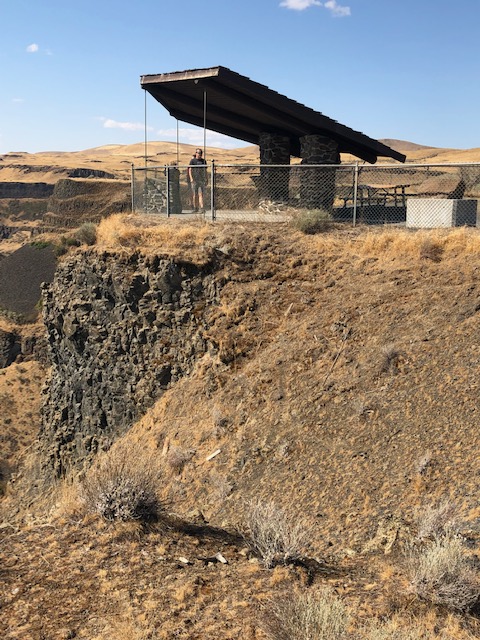
Travelers should be prepared for poor or no cell service; wear good hiking shoes and probably a hat and bring water if your visit is in warm weather. Also, watch for rattlesnakes. Note that the trail along the cliff top to a point overlooking the falls from above has been permanently closed due to safety concerns, but there is still plenty to see of the falls’ natural beauty from several approved viewing points. Washington State Parks Service warns that parking is often extremely limited on weekends and holidays and that turning an RV or trailer around is difficult in the parking lot.
Here are details you will need, including the address to enter into your navigation app:
Palouse Falls State Park, Palouse Falls Rd, LaCrosse, WA 99143. Open: Summer 6:30-dusk; Winter 8-dusk. Restrooms on site.
And with that our southeast Washington itinerary is complete and it’s time to head home. We hope you enjoyed your visit and satisfied your desire to learn something of the region.
Updated June 2024
 Hit the Road in the Pacific Northwest